Not every tree problem means the tree has to go. Plenty of trees with dead branches, a lean, or a wound in the bark recover fine with the right pruning or treatment. The five signs below are different. They mark the point where an arborist would tell you removal, not maintenance, is the honest recommendation: more than half the crown dead, a trunk wound or hollow that has eaten through the tree’s structural wood, a new crack or lean tied to root failure, a tree positioned to hit your house or a neighbor’s regardless of how it looks, and fungal growth on the trunk itself layered with any of the above. If your tree matches one of these, the decision has likely already been made for you.
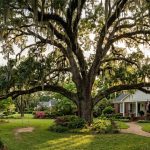
Newnan’s oldest neighborhoods, the ones with antebellum homes and legacy oaks planted well over a century ago, carry a specific version of this problem. Trees that size don’t fail small. When one of them goes, it goes as a full-canopy event, not a limb.

1. More Than Half the Canopy Is Dead
A tree with scattered dead branches can often be pruned back to health. A tree where more than half the live crown is gone usually can’t.
University of Georgia Extension’s own guide to declining trees walks through exactly this threshold: once dieback covers a majority of the crown, the tree has typically lost more of its water and nutrient transport system than it can rebuild, even with treatment. This is different from a young or recently transplanted tree losing a branch or two to stress. It’s a mature tree that’s been declining for one or more full seasons, with the dead portion outweighing the living one.
If you’re looking at a tree in an older Newnan yard where half the canopy leafed out this spring and half stayed bare, that’s the threshold, not a maybe.
2. Trunk Damage or a Hollow That’s Lost Its Structural Wood
How much of the trunk is compromised matters more than whether there’s a cavity at all.
University of Maryland Extension puts a specific number on this: damage covering less than about 25 percent of the trunk’s circumference can often heal over on its own, while damage beyond that typically doesn’t close and usually points toward removal. Hollow trunks complicate this further. University of Florida research on trunk cavities found that a tree can lose up to roughly 70 percent of its wood cross-section in the center and still keep about two-thirds of its strength, as long as there’s no actual opening in the trunk. A closed-over hollow on an otherwise sound tree isn’t automatically a removal. An open cavity you can see or reach into, especially paired with any lean, usually is.
This is exactly the kind of nuance that gets lost when a tree just gets flagged as “hollow, remove it” without anyone actually checking how much sound wood is left.
3. A New Crack or Lean Tied to Root Failure
A tree that has always leaned is usually stable. A tree that starts cracking at the trunk or leaning further than it used to is telling you the root system is losing its grip.
The USDA Forest Service’s own hazard tree research treats lean as one of the more serious indicators precisely because it often signals root or butt rot rather than a cosmetic issue, and its technical guidance on hazard tree identification notes that a corrected, long-term lean with upswept growth is a different situation than a sudden one. What separates the two is timeline and evidence. A tree that has leaned the same amount for years, with the trunk curving back upright toward the top, has usually compensated for it. A tree that developed a new lean after a storm or a wet season, especially with cracked or heaved soil on the opposite side, is showing you the root plate itself may be shifting. That combination is one of the clearer signals that removal, not monitoring, is the right call.
4. The Tree Is Positioned to Hit a House, Driveway, or Power Line
Sometimes the tree itself isn’t the problem. Its location is.
A tree that’s otherwise in reasonable shape but leans over a roofline, sits within falling distance of a driveway or a neighbor’s fence, or has grown into power lines carries a different kind of risk math than a tree standing in open yard. The Insurance Information Institute notes that homeowners insurance typically covers damage from a tree that falls on an insured structure, but it does not cover the cost of removing a tree preemptively, even one you already know is a problem. That gap matters. Waiting until a positioned tree actually fails usually costs more, in both money and risk, than removing it while it’s still standing and the job is straightforward.
In Newnan’s older neighborhoods, where mature trees were often planted well before the home’s current addition, garage, or driveway existed, this mismatch between where a tree is and where it probably shouldn’t be anymore is one of the more common reasons a healthy-looking tree still needs to come down.
5. Fungal Growth on the Trunk Itself, Stacked With Any of the Above
A mushroom in the yard after a rainy week usually isn’t urgent on its own. Fungal growth on the trunk, paired with dieback, trunk damage, or a lean, is a different situation.
Bracket-shaped fungi growing directly from the bark, rather than the surrounding soil, generally indicate that decay has already reached the trunk itself, not just the roots below ground. On its own, this is worth having assessed rather than panicked over. Stacked with one of the first four signs on this list, meaning half the crown is already dead, or the trunk shows real structural damage, or there’s a new lean, it tips the decision firmly toward removal rather than continued monitoring.
What This Looks Like on Newnan’s Older Lots
Most of the removal calls we get in Newnan’s historic district and surrounding established neighborhoods involve a tree that’s been “watched” for a year or two before anyone called. That’s usually a legacy oak or hackberry, planted decades before the current owner, sitting close enough to a house or a detached garage that its condition was never just a landscaping question.
The pattern we see most often is a slow one: a little dieback one summer, a hollow that seemed stable, then a storm that turns a manageable lean into a genuine hazard. None of these trees fail without warning. The warning is just usually spread out over a couple of years, which makes it easy to normalize until a storm forces the decision.
What to Do Before You Call
Do this first:
- Take photos of the trunk, the base, and the full canopy, from a few different angles
- Note how long you’ve noticed the issue, even roughly, since timeline matters for diagnosis
- Check whether the tree is within falling distance of your house, a neighbor’s property, or power lines
Don’t do this:
- Don’t assume a hollow automatically means removal. Ask for an actual assessment of remaining sound wood before agreeing to the biggest, most expensive option
- Don’t wait for a second storm to see if the lean gets worse. Root failure doesn’t reverse itself
- Don’t have work done on a legacy tree near a historic home without asking whether pruning or cabling could preserve it first
Call a professional when:
- More than half the crown is dead
- The trunk shows open damage beyond roughly a quarter of its circumference
- You’ve noticed a new or worsening lean, especially with disturbed soil at the base
- The tree could hit a structure, driveway, or power line if it failed
An arborist consultation gives you an actual answer instead of a guess. 770-Tree-Guy’s two ISA Certified Arborists hold the ISA Qualification in Tree Risk Assessment, which is built specifically around separating trees that need monitoring from trees that need to come down, on legacy oaks around historic Newnan as much as on newer plantings anywhere else.
Get a Straight Answer on Your Tree
If a tree in your yard matches more than one of these signs, that’s not a maybe. Call (770) 373-4438 to schedule an assessment with an ISA Certified Arborist, or if it’s already leaning further than it was yesterday, treat that as an emergency call, not a scheduled one.