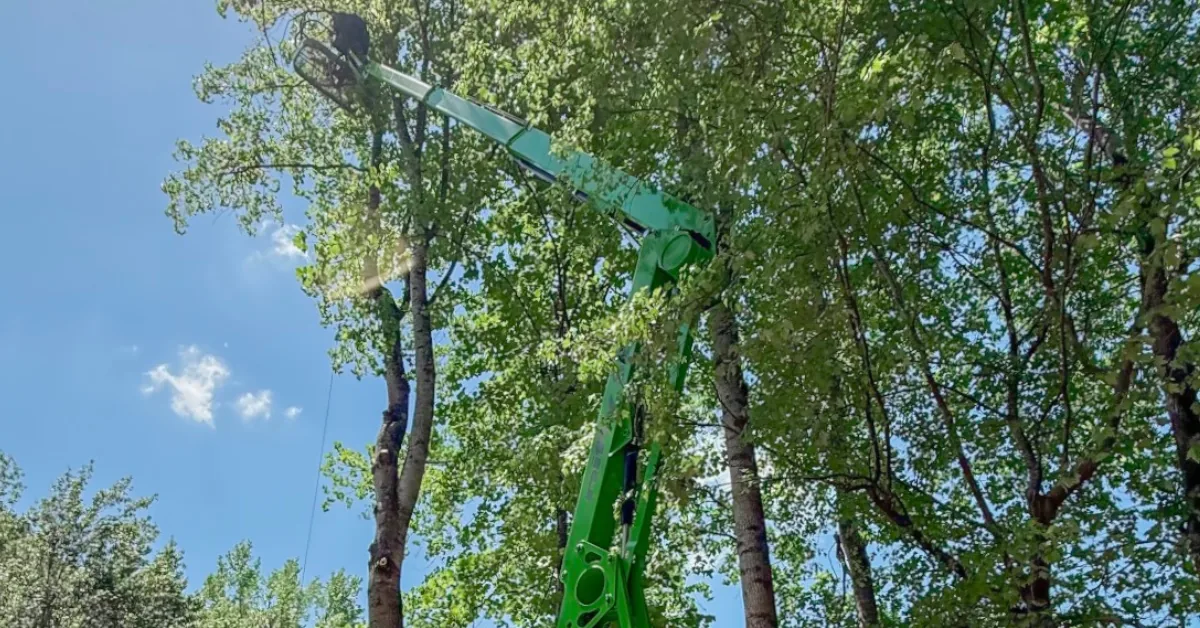
Expert Tree Trimming Across South Metro Atlanta: What This Service Covers
Tree trimming, also called pruning, is the selective removal of branches to improve a tree’s health, structure, and safety without removing the whole tree. 770-Tree-Guy provides professional tree trimming and tree pruning across Sharpsburg, Newnan, Peachtree City, Fayetteville, and the surrounding South Metro Atlanta communities. With locations based in both Sharpsburg and Fayetteville, our crews are positioned to respond quickly across Coweta, Fayette, and the surrounding counties.
Every job is planned and cut by ISA Certified Arborists who understand tree biology, not a crew guessing which limb to take. When a tree is too far gone to save, that same judgment guides our tree removal work.
Call (770) 373-4438 for a free estimate, usually available the same day.
Trim or Remove: When Pruning Is the Right Call
Pruning is the right call when the tree itself is structurally sound, and the issue is limited to specific branches: deadwood, storm-broken limbs, overgrown growth near a roofline, or crown density that’s blocking light and airflow. If more than half the canopy is dead, the trunk is split or hollow, or the tree is leaning after a storm, that’s a removal decision, not a trimming one. We tell you which situation you’re in during the estimate, not after the cutting starts.
Signs Your Tree Needs Pruning: What to Look For
- Crossing or rubbing branches
- Deadwood scattered through the canopy
- Limbs hanging over the roof, driveway, or power lines
- Dense interior growth blocking light and airflow
- One-sided or lopsided canopy growth
- Water sprouts or suckers along the trunk and limbs
- A tree that was topped or poorly cut by a previous crew
Best Time to Prune in South Metro Atlanta: Timing by Season and Species
Light, routine pruning to remove weak, dead, or diseased limbs can be done almost any time of year with little effect on the tree, according to ISA’s pruning guidance. Heavier structural pruning is best done before the spring growth flush, which in this part of Georgia typically means late winter. Oaks are the exception: pruning during Georgia’s warm, humid growing season raises the risk of spreading oak wilt through fresh wounds, so we schedule oak work for the dormant season whenever the calendar allows.
Pruning Techniques We Use: Cleaning, Raising, Reduction, and Thinning
- Cleaning removes dead, dying, weakly attached, or low-vigor branches from the crown.
- Raising removes lower limbs for clearance over driveways, walkways, and structures.
- Reduction shortens height or spread by cutting back to a lateral branch large enough to take over, used for utility line clearance without destroying the tree’s form.
- Thinning reduces canopy density to improve light and wind penetration.
Every cut follows ANSI A300 pruning standards, the industry benchmark for where and how a cut should be made.
Why Topping Damages Trees: A Practice We Don’t Use
Topping, the indiscriminate cutting of limbs down to stubs, is one of the most damaging things you can do to a tree. It triggers weak, fast-growing regrowth, invites decay at every cut, and permanently disfigures the canopy. We won’t top a tree, even on request. If a tree has genuinely outgrown its space, reduction pruning or removal are the honest options.
Certifications That Matter: What to Verify Before You Hire
Two ISA Certified Arborists are on staff, holding the ISA Qualification in Tree Risk Assessment. 770-Tree-Guy is also TCIA accredited, with NCCCO certified crane operators for large limb removal near structures or power lines, and a licensed pesticide contractor for disease and pest treatment. The Georgia Forestry Commission’s homeowner checklist for hiring a tree professional covers exactly these credentials, plus insurance and permits, if you want a second reference before deciding. OSHA’s Tree Care Industry data shows how often falls and electrical contact injure untrained crews working near lines and heights, which is exactly the work a pruning job near your roofline or utility drop involves.
Licensed and Insured: The One Question to Ask Every Tree Company
Yes. We carry full general liability and workers’ compensation coverage and are licensed in Georgia, with a current certificate of insurance provided before work starts. An uninsured crew working overhead near your house is a liability risk you inherit if something goes wrong. Ask for proof of insurance before anyone climbs a ladder or rope on your property.
The Trimming Process: What Happens On-Site
- Assessment: We check species, structure, and the specific issue you called about.
- A pruning plan: Which technique, how much canopy comes off, and why.
- The cut: Made at the branch collar, following ANSI standards, never flush or stubbed.
- Access: Climbing gear or a lift, depending on height and site access.
- Cleanup: Debris chipped and hauled the same day.
Cost Factors: What Actually Drives the Price
Cost depends on the tree’s height and canopy size, how many limbs need work, access to the site, and whether a lift or climbing is required. Pruning a single accessible limb costs far less than a full structural prune on a mature oak. You get a written, itemized estimate before any cutting starts. New customers get 10% off any non-emergency service over $1,000 (not combinable), or $100 off same-day hire over $2,500 (combinable). Financing, military, and senior discounts* are available.
* The discount must be mentioned at the time of the estimate and quote.
Local Tree Species: Pruning Needs by Species
Oaks need dormant-season pruning to limit oak wilt risk and benefit most from crown cleaning to remove deadwood common in older canopies near downtown Newnan and Fayetteville.
Loblolly and shortleaf pine rarely need structural pruning but benefit from removing storm-damaged or beetle-affected limbs quickly.
Crape myrtles, common on South Metro Atlanta lots, are frequently over-pruned into “crape murder”; we prune for form, not stub cuts.
River birch benefits from early structural pruning to manage codominant stems before they become a failure point.
Why South Metro Atlanta Property Owners Choose 770-Tree-Guy
- 16 years in business, crew experience to 2004
- Two ISA Certified Arborists, ISA Tree Risk Assessment Qualification
- TCIA-accredited, NCCCO-certified crane operators
- Family-owned, fully licensed and insured
- BBB accredited, A+ rated
- Financing, military, and senior discounts available (The discount must be mentioned at the time of the estimate and quote.)
Service Area: Cities, Counties, and ZIP Codes We Cover
Counties: Coweta, Fayette, with service into Clayton County.
Cities and ZIP codes: Sharpsburg (30277), Newnan (30263, 30265), Peachtree City (30269), Fayetteville (30214, 30215), Senoia, Tyrone, Brooks, Palmetto, Jonesboro, and Riverdale.
Schedule Tree Trimming: Next Steps
Correct pruning protects your tree’s health and your property, while a bad cut can shorten a tree’s life or create a hazard years later. From routine crown cleaning in Newnan to utility-line clearance in Peachtree City, 770-Tree-Guy delivers documented, insured pruning backed by real certifications.
Call (770) 373-4438 today, or request your free estimate online.
770-Tree-Guy | Licensed and Insured Tree Trimming Across South Metro Atlanta | ISA Certified Arborists | BBB Accredited A+ Rated 269 Short Rd, Sharpsburg, GA 30277 | 320 W. Lanier Avenue, Fayetteville, GA 30214