Key Takeaways
- The Southern live oak has been Georgia’s official state tree since 1937, and mature specimens are found throughout Newnan’s older neighborhoods.
- Live oaks are exceptionally strong and long-lived, but their massive horizontal limbs and shallow root flare create specific maintenance needs.
- Proper structural pruning early in a live oak’s life prevents the kind of included bark and weak limb unions that cause failures decades later.
- Live oaks are generally resistant to many common tree diseases but remain vulnerable to specific threats, including oak wilt and root compaction from construction.
- Preserving a mature live oak on a Newnan property is almost always worth the effort, since these trees can live for centuries and can’t be replaced on any practical timeline.
If you’ve admired a wide, low, sprawling oak canopy anywhere in Newnan’s older neighborhoods, chances are good you were looking at a Southern live oak. Georgia named the live oak its official state tree in 1937, and it is easy to see why: these are some of the longest-lived, most structurally distinctive trees in the Southeast, capable of standing for centuries and developing a canopy spread that can rival or exceed the tree’s own height.
For Newnan homeowners lucky enough to have a mature live oak on their property, the question is not usually whether to keep it; it’s how to keep it healthy and structurally sound for the long haul. A well-maintained live oak becomes more than landscaping. It becomes part of the property’s identity and value.
What Makes Them Different
Why are live oaks so different from the other large hardwoods trees common in Coweta County? The answer starts with a growth habit. Trees like sweetgum and tulip poplar tend to push upward more aggressively, while live oaks invest heavily in broad lateral growth, creating long horizontal limbs that spread wide from the trunk.
That form is part of what makes the species so iconic, but it also changes how the tree must be managed. A mature live oak carries enormous weight on those limbs, especially when the canopy is full, so branch structure matters just as much as trunk size. The tree’s evergreen nature also means the canopy carries weight through much of the year, not just during a seasonal leaf-out.
Live oaks are also known for dense, strong wood and a long survival record in severe weather. But strong wood does not automatically mean strong structure. If the limb attachments are poor or the root zone is stressed, even a tough tree can become vulnerable.
Why Early Pruning Matters
The structural pruning question is one of the most important parts of live oak care. A live oak’s long, sprawling limbs are a strength when well-supported at the trunk, and a liability when they’re not. The most common structural problem in mature live oaks traces back to how the tree was pruned, or wasn’t pruned, when young. Left without structural guidance, live oaks can develop included bark, a weak point where two major limbs grow so closely together that bark gets pinched between them instead of forming a strong, fused union. These unions look fine for years, sometimes decades, but they’re significantly weaker than a properly formed branch attachment and are a common failure point during high wind events. This is why structural pruning in the first 10 to 15 years of a live oak’s life matters.
- Selectively removing competing leaders and reducing overly long limbs while the tree is young helps establish canopy architecture that holds up for the following two centuries.
- For homeowners with an already-mature live oak, the equation shifts toward managing what’s already there: periodic inspection of major limb unions, selective weight reduction on excessively long limbs, and removing deadwood before it becomes a falling hazard. This work should be done by someone experienced specifically with large, mature oaks, since improper cuts on thick limbs can introduce decay pathways that take years to become visible.
- Good pruning is not about making the tree smaller; it is about making the structure safer while preserving the character of the canopy.
Underground Risks
Live oaks develop a wide, relatively shallow root flare that extends well beyond the canopy’s drip line, often further than homeowners expect. That means the tree’s underground half is just as important as what you see overhead.
- Construction activity, driveway paving, utility trenching, or repeated heavy equipment traffic within a live oak’s root zone can compact soil enough to restrict oxygen and water movement to the roots, a stress that may not show up in the canopy for years.
- Grading changes near the trunk, adding or removing soil, or installing hardscape close by can also have an outsized effect on a live oak’s health compared to a deeper-rooted species.
- Even a project that seems minor, like widening a parking area or replacing a patio, can become a serious stressor if it disturbs too much of the root system. If you’re planning any construction or landscaping within 20 to 30 feet of a mature live oak’s trunk, it’s worth having an arborist weigh in before work starts.
- In many cases, the best protection is simple: avoid compacting soil, keep heavy machinery away from the root zone, and preserve the natural grade as much as possible. When a live oak has access to oxygen, water, and stable soil, it is far more likely to remain vigorous.
Disease And Pest Watch
Live oaks are generally more disease-resistant than many other oak species, but not immune. Oak Wilt,a fungal disease that can be fatal, spreads through root grafts between nearby oaks and through beetles attracted to fresh pruning wounds, which is one reason experienced arborists avoid pruning oaks during peak beetle activity when it can be avoided.
Live oaks can also develop hypoxylon canker, typically in trees already stressed by drought, root damage, or construction impact. It appears as a grayish, crusty bark discoloration and usually signals internal decay or severe decline. Because live oaks can carry significant internal decay for years while the canopy still looks full, homeowners sometimes assume a tree is healthy long after the root system or trunk has begun to weaken. That is why periodic professional assessment is the most reliable way to catch problems early. A live oak may not show dramatic decline until stress has advanced significantly, so looking for subtle symptoms matters. Common warning signs include – unseasonal leaf drop, thinning canopy density, branch dieback in the upper crown, or visible cracking at major limb unions.
Preservation Is Usually Worth It
For most Newnan properties, preserving a mature live oak is almost always worth the effort. These trees can live for centuries, provide unmatched shade, and create a sense of place that no newly planted tree can replace in any practical timeline. Removing one should never be the first option unless the tree is truly beyond saving or has become an unmanageable hazard. Preservation can include several kinds of care, depending on the tree’s condition. Structural pruning may improve balance and reduce risk. Cabling or bracing can sometimes support weak but valuable limbs. Soil management, mulching, and construction protection can reduce stress and extend the tree’s life. The right approach depends on what the arborist finds during the inspection.
Homeowners often underestimate the value of a mature live oak because its beauty feels familiar. But on a property level, that tree may be one of the most significant assets in the landscape. Protecting it protects shade, curb appeal, habitat value, and the character of the yard itself.
Why Homeowners Need Professional Help
Live oak care is not the same as routine trimming. Because the tree is large, broad, and often overhanging homes, drives, and walkways, the work requires experience, equipment, and a careful plan. Poorly placed cuts can do more harm than good, and improper access can damage surrounding turf, beds, or the root zone.
A professional arborist in Newnan, Georgia can evaluate the canopy for included bark, deadwood, structural imbalance, decay, and storm-related weaknesses. They can also recommend whether pruning, cabling, soil care, or monitoring is the best next step. For a mature tree, that kind of judgment is far more valuable than a simple “cut it back” approach. This is especially important in Newnan, where many live oaks are part of established neighborhoods and older landscapes. A tree with cultural value or impressive size deserves specialized care, not generic tree trimming.
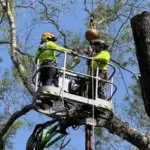
770-Tree-Guy has been caring for Newnan’s live oaks and other mature hardwoods since 2004. Our ISA-certified arborists understand how to preserve the structure and health of large canopy trees while protecting the surrounding property during the work. We use our 92-foot and 65-foot spider lifts to safely reach wide-canopy, large-limb growth that standard equipment can’t access. That matters when a live oak’s limbs spread over a roof, driveway, pool, or landscaped area and the job needs precision, not force.
Our arborists can assess your tree’s health, and explain the best preservation strategy to assist you in making the right decision for the long term. If your live oak needs an evaluation, structural pruning, deadwood removal, or help after storm damage.
Frequently Asked Questions About Southern Live Oaks in Newnan, Georgia
Why is Georgia’s state tree the live oak specifically?
The Georgia General Assembly designated the live oak as the official state tree in 1937, recognizing its prominence, longevity, and cultural significance across the state, including in older communities like Newnan.
How long can a Southern live oak actually live in Newnan, Georgia?
Live oaks are among the longest-lived trees in the Southeast, with well-documented specimens exceeding 200 to 300 years old under good conditions.
My live oak has very long, low limbs. Is that a problem?
Not automatically. It’s part of the species’ natural growth habit. The concern is whether those limbs have strong attachment points at the trunk, which an arborist assessment can determine.
Can I prune my own live oak, or does it need a professional?
Minor deadwood removal on small limbs is generally manageable for homeowners, but structural pruning on major limbs, especially on a mature tree, should be handled by an experienced arborist.
Is it safe to build a patio or driveway near my live oak?
It depends on the distance from the trunk and the extent of grading involved. Because live oak root systems extend well beyond the canopy, an arborist should assess the project before construction begins.
Summary Checklist: Tree Care & Health Inspection Checklist
| Concern | What to Watch For | Recommended Action |
| Young tree structure | Competing leaders, tight limb angles | Structural pruning in the first 10 to 15 years |
| Mature limb unions | Included bark, cracking at major limb joints | Periodic inspection and weight reduction pruning |
| Root zone health | Nearby construction, grading, or paving | Arborist consultation before any work within 20 to 30 feet |
| Disease signs | Grayish bark discoloration, unseasonal leaf drop | Prompt professional assessment |
Final Advice
A mature Southern live oak is one of the most valuable, and most irreplaceable, features a Newnan property can have. Given how slowly the species grows, a live oak planted today won’t reach anything close to its eventual iconic form for a century or more, which is why preservation through targeted pruning, cabling, or soil management is almost always the right approach for an existing tree, rather than removal, unless the tree has genuinely become an unmanageable hazard.