Key Takeaways
- Peachtree City protects specimen trees by species and trunk diameter, and cutting one down without a permit can result in citations to both the homeowner and the tree company.
- Diameter thresholds vary by tree type: understory trees like dogwood are protected starting at 8 inches DBH, hardwoods at 20 inches, and pines and other softwoods at 24 inches.
- Bradford pear is specifically exempt from Peachtree City’s specimen tree protections.
- Every residential lot in Peachtree City must retain a minimum of two trees, and clearing that threshold below generally requires replanting.
- Several Peachtree City HOAs layer their own approval requirements on top of the city’s permit process, so city approval alone isn’t always the full picture.
If you’re a Peachtree City homeowner looking at a tree in your yard and wondering whether you can just call a crew to take it down, the short answer is: it depends, and getting it wrong can cost more than the removal itself. Peachtree City has some of the strictest tree protection rules in South Metro Atlanta, built around a specimen tree ordinance designed to preserve the wooded character that defines the city. Understanding how that ordinance works before you make a call is the difference between a straightforward removal and an unexpected citation.
Peachtree City was master-planned around its tree canopy from the beginning, with golf cart path corridors, greenbelt land, and residential lots all developed to preserve as much existing forest as possible rather than clearing it wholesale. That founding philosophy is baked directly into the city’s code today through its specimen tree ordinance, which regulates removal based on a tree’s species and trunk diameter, not just its location or condition.
What Counts As Protected
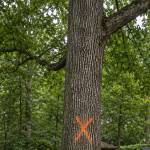
The core of the ordinance is a set of diameter thresholds, measured at breast height, generally about 4.5 feet off the ground, often abbreviated as DBH. These thresholds vary depending on the type of tree.
- Understory trees, including species like dogwood, redbud, and flowering cherry, are protected once they reach 8 inches DBH.
- Hardwoods, including oaks and maples, are protected once they reach 20 inches DBH.
- Softwoods, including pine and sweetgum, are protected once they reach 24 inches DBH.
- Bradford pear is specifically exempted from these protections.
In practical terms, this means a fairly modest dogwood in your front yard could already meet the specimen threshold, while a young pine might not require a permit for several more years of growth. Trunk diameter, not overall tree size or age as perceived by eye, is what actually determines whether a permit is required, which is exactly why an accurate measurement matters before deciding a tree is small enough to remove without one.
When A Permit Is Needed
If a tree on your property meets or exceeds the diameter threshold for its species, removing it requires a permit from the city, regardless of whether the tree is healthy, diseased, dead, or storm-damaged. There’s no blanket exemption for trees that are dead or dying; the specimen protection is based on size and species, not condition, though a tree’s condition may factor into how quickly the city processes the permit or whether it requires supporting documentation like an arborist letter.
- Beyond individual tree removal, permits are also generally required for lot clearing associated with new construction, additions, or significant landscaping changes, since those projects have the potential to remove multiple specimen trees at once.
- If you’re planning any project that involves clearing a meaningful portion of a wooded lot, that’s a conversation to have with the city, or with a tree service that already handles this permitting regularly, before equipment shows up.
Complications To Know
A few specific circumstances come up often enough in Peachtree City that they’re worth knowing about in advance.
- Trees near a property line may require your neighbor’s approval or a survey confirming the tree’s exact location relative to the boundary.
- If disease or decline is not obvious, the city can require an arborist letter documenting the tree’s condition before approving the permit.
- Several Peachtree City HOAs, including Cresswind, Planterra Ridge, and Kedron Hills, require separate approval for tree work in addition to city approval.
- Every residential lot must retain at least two trees, and if removals bring the lot below that minimum, replanting is generally required.
- Trees in environmentally protected areas, such as stream buffers, wetlands, or conservation easements, may have additional restrictions beyond standard tree rules.
Those extra layers are why tree removal in Peachtree City is rarely just a “cut and haul” job. Even when the tree itself qualifies for removal, the property, neighborhood, and documentation requirements can still change what needs to happen before work begins.
What Happens Without One
Peachtree City takes unpermitted specimen tree removal seriously. Removing a protected tree without going through the permit process can result in a citation, and notably, that citation can apply to both the homeowner and the contractor who performed the work, with a mandatory court appearance in some cases. This is one of the more significant reasons to work with a tree service that’s already familiar with Peachtree City’s ordinance and pulls permits as a standard part of the job, rather than assuming a homeowner’s verbal go-ahead is sufficient authorization to start cutting.
It’s also worth knowing that the city requires contractors to demonstrate proper credentials before a permit is issued, specifically an Occupational Tax Certificate along with proof of liability insurance and workers’ compensation coverage. This requirement exists partly to protect homeowners: hiring an uninsured or unlicensed crew for tree work doesn’t just risk a permit violation, it can leave a property owner exposed if someone is injured on the job.
How The Process Works
While specifics can shift over time, the general path for a Peachtree City specimen tree removal typically involves identifying the tree’s species and measuring trunk diameter to confirm whether it meets the specimen threshold, submitting a permit application to the city, and, where applicable, securing HOA approval and neighbor sign-off for boundary-adjacent trees. Once approved, the permit authorizes the removal, and the contractor performing the work needs to be able to show their own credentials as part of that process.
For homeowners, the most efficient way through this is generally to hire a professional & experienced tree service firm in Peachtree City, Georgia familiar with the city’s requirements from the start, rather than getting a removal quote first and discovering the permitting requirements afterward. A company that regularly works in Peachtree City should be able to tell you, often during the initial estimate, whether a given tree meets specimen status and what documentation the removal will require.
Why Accurate Evaluation Matters
A tree can look manageable from the street and still fall under Peachtree City’s permit rules once it’s measured properly. An arborist can perform detailed evaluation to identify the species, measure DBH correctly, evaluate whether the tree appears dead, dying, diseased, or hazardous and whether the city is likely to require additional documentation. That saves time, reduces guesswork, and helps homeowners avoid the common mistake of assuming “small enough” means “permit-free.”
Another reason proper evaluation matters is that some removals are not just about the tree itself. A tree near a driveway, pool, addition, utility line, or property edge may require more documentation, more care, and more coordination than a basic residential removal. The earlier that planning starts, the easier it is to stay compliant and avoid delays.
Why Homeowners Get Caught Off Guard
Many homeowners do not realize that Peachtree City’s rules are designed around preservation, not convenience.
- If a tree appears healthy, or if it has been on the property for years, it is easy to assume the owner can decide to remove it without paperwork. In reality, size alone can place the tree under protection, even if the tree is not causing visible damage.
- Homeowners are also often surprised by how many moving parts can be involved in one removal. Between city rules, HOA rules, boundary issues, arborist documentation, and contractor licensing, the process can become much more detailed than expected. That is especially true when the tree sits in a visible part of the yard, where mistakes are more likely to be noticed and reported.
- It is smart to treat every potentially large tree in Peachtree City as a permit question until proven otherwise. A quick professional assessment is far better than assuming a tree is exempt and finding out later that it was protected.
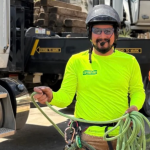
770-Tree-Guy makes tree removal in Peachtree City straightforward. Our ISA-Certified Arborists assess your tree, determine whether permitting may be required, and guide you through the process before any work begins. We handle permit documentation, provide free estimates, and complete every job using specialised equipment and experienced crews. Whether you need routine tree removal, emergency service, or advice on local tree regulations, you can count on 770-Tree-Guy for safe, professional tree care.
Frequently Asked Questions About Peachtree City Tree Removal Permits
How do I know if my tree meets the specimen size threshold?
It depends on measuring trunk diameter at roughly 4.5 feet above ground (DBH) and comparing that to the threshold for the tree’s species: 8 inches for understory trees like dogwood, 20 inches for hardwoods, and 24 inches for pines and other softwoods.
Is a permit required if the tree is already dead?
Yes. Peachtree City’s specimen protections are based on size and species, not the tree’s health, so a dead tree that meets the diameter threshold still requires a permit to remove.
What if my tree is diseased but it’s not obvious just by looking at it?
The city can require an arborist letter documenting the disease or decline before approving a permit in these cases. This is a common requirement for trees with internal issues that aren’t visible from the outside.
Do I need my neighbor’s permission to remove a tree on my own property?
Only if the tree is within 5 feet of the shared property line, in which case neighbor approval or a survey is required in addition to any specimen tree permit.
Does city approval mean my HOA is automatically fine with the removal too?
No. Several Peachtree City HOAs require their own separate approval process for tree work, so it’s worth checking with your HOA in addition to securing the city permit.
Can I remove undergrowth without a permit?
Usually yes on residential property, but not in environmentally protected areas such as wetlands, stream buffers, or conservation easements.
Summary Checklist: Permit and Assessment Requirements
| Situation | What to Check | What to Do |
| Tree may be protected | Species and DBH | Measure the trunk and confirm threshold |
| Tree is dead or damaged | Size still matters | Apply for a permit if specimen-sized |
| Tree is near a property line | Boundary distance | Get neighbor approval or a survey |
| Tree has disease or decline | Proof may be required | Request arborist documentation |
| HOA community lot | HOA rules | Get HOA approval before work starts |
| Lot may drop below two trees | Tree count | Replant as required |
| Tree is in a protected area | Buffer or easement rules | Check with the city before starting |
Final Advice
Never assume a tree can be removed simply because it is on your property. In Peachtree City, factors such as the tree’s species, trunk diameter, location, HOA requirements, and environmental protections can all affect whether a permit is required. Taking a few minutes to verify those requirements before work begins can save you from citations, project delays, and unexpected costs.
If you’re unsure whether your tree falls under the city’s ordinance, have it evaluated before making any decisions. A qualified ISA-Certified Arborist can identify the species, measure the tree correctly, explain the permitting process, and recommend the safest course of action. Professional guidance at the start of the project is often the simplest way to avoid costly mistakes later.