Key Takeaways
- Live oak, southern magnolia, and river birch are excellent choices for shade, resilience, and long-term landscape performance.
- Flowering dogwood and eastern redbud are native favorites that provide exceptional seasonal color while supporting pollinators.
- Drought tolerance matters. Atlanta’s hot summers can stress trees with shallow or water-hungry root systems.
- Heavy clay soil needs proper preparation so new roots can establish successfully.
- Avoid Bradford pear, silver maple, and Leyland cypress because of structural, pest, disease, or drought-related problems.
- Fall is generally the best planting season, giving roots time to establish before the next summer’s heat.
Choosing the right tree for your South Metro Atlanta property is about more than finding something that looks good at the garden center. Atlanta-area landscapes present several challenges, including heavy red clay soil, hot summers, periods of drought, intense storms, and occasional ice.
The right tree can provide decades of shade, beauty, wildlife habitat, privacy, and property value. The wrong tree may develop weak branches, struggle with drought, damage sidewalks, or become a costly maintenance problem.
Here are the trees that consistently stand out for Atlanta-area landscapes and a few that are better left off your planting list.
1. Live Oak: The Ultimate Shade Tree
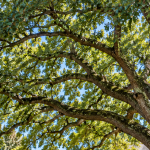
For homeowners with enough space, live oak is one of the strongest long-term choices for South Metro Atlanta. Its broad, spreading canopy provides substantial summer shade while allowing more sunlight through during the cooler months. Once established, live oak is remarkably tolerant of heat and drought, and its strong structure makes it well suited to many Atlanta-area properties.
Live oaks can eventually reach approximately 60 to 75 feet tall, with an even greater spread. That size is exactly why planning matters. Plant them well away from houses, driveways, utility lines, and other structures. The tradeoff is patience. Live oak can grow more slowly when young, but its longevity makes the wait worthwhile. Established specimens can become defining features of a landscape for generations.
Best for: Large yards, shade, long-term investment, and properties where a large canopy is desired.
2. Southern Magnolia: Evergreen Beauty and Privacy
Few trees capture the character of the South quite like the southern magnolia. Its glossy evergreen foliage provides year-round visual interest and privacy, while its large, fragrant flowers create a spectacular display in late spring and summer. The dense leaves also provide valuable screening when planted in the right location.
Southern magnolia typically reaches 40 to 60 feet tall, although mature size varies by cultivar and growing conditions. This tree performs well in full sun to partial shade and prefers moist, well-drained soil. It is also relatively tolerant of heat and drought once established.
One consideration is cleanup. Magnolias drop large leaves, flowers, and seed structures, so avoid planting them immediately beside areas where falling debris could create maintenance or slipping concerns. For colder or more exposed microclimates, consider a hardier cultivar such as ‘Bracken’s Brown Beauty.’
Best for: Privacy, evergreen screening, traditional Southern landscapes, and homeowners who want year-round foliage.
3. River Birch: A Standout for Moist Areas
River Birch combines fast growth with year-round visual interest. Its peeling, exfoliating bark provides a striking winter texture. In spring, its catkins add seasonal interest and can provide food for wildlife. During summer, the tree produces attractive green foliage that turns golden in fall.
River birch generally grows 40 to 50 feet tall and performs particularly well in consistently moist soils. That makes it an excellent candidate for rain gardens, low areas, pond edges, and properties where other trees may struggle with wet conditions.
Unlike some birch species, river birch has good resistance to bronze birch borer, making it a much better choice for Atlanta’s climate. For maximum landscape impact, plant multiple river birches together rather than treating them as isolated specimens.
Best for: Moist soil, drainage areas, rain gardens, wildlife-friendly landscapes, and fast-growing shade.
4. Flowering Dogwood: Atlanta’s Classic Ornamental
Flowering dogwood is one of the best small-to-medium native trees for South Metro Atlanta. Its spring flowers appear in March or April, followed by attractive green foliage, red fruit, and colorful fall leaves that can range from burgundy to purple.
Mature trees generally reach 15 to 25 feet, making flowering dogwood a much better option than large shade trees for smaller residential properties. Dogwoods prefer partial shade and acidic, well-drained soil. Atlanta’s heavy clay can be challenging, so proper soil preparation and drainage are particularly important.
Dogwood can be susceptible to anthracnose, but homeowners can reduce risk by selecting resistant cultivars. ‘Appalachian Spring‘ is one option worth considering. Beyond appearance, flowering dogwood provides ecological value by supporting birds and pollinators.
Best for: Small yards, partial shade, native landscaping, spring color, and wildlife habitat.
5. Eastern Redbud: Brilliant Spring Color in a Compact Package
If your goal is maximum seasonal impact without planting a huge tree, eastern redbud deserves serious consideration. In early spring, its bare branches become covered with vivid pink-to-magenta flowers. Heart-shaped leaves appear afterward, providing attractive summer foliage.
Eastern redbud typically reaches 20 to 30 feet tall and can tolerate a range of soil conditions. Once established, it also handles periods of drought reasonably well. Its manageable size makes it useful beneath utility lines, near patios, or in smaller suburban yards, provided it has enough room to develop naturally.
Redbud is also an excellent pollinator-supporting tree. Pairing it with another spring-flowering native such as serviceberry can extend seasonal interest.
Best for: Small and medium yards, spring color, pollinator gardens, and areas near patios or utility lines.
6. Tulip Poplar: Fast Growth for Large Properties
Georgia’s state tree, the tulip poplar, is a spectacular choice when you have plenty of room. It is one of the faster-growing trees on this list and can eventually reach 70 to 90 feet or more. Its straight trunk, tall form, distinctive tulip-shaped flowers, and yellow fall foliage make it an impressive landscape specimen.
Tulip Poplar has an extensive root system that can also help stabilize slopes. However, fast growth comes with limitations. Tulip poplar is not appropriate for tight urban spaces or locations immediately beside foundations, driveways, or overhead utilities. Its wood can also be vulnerable to storm and ice damage. For that reason, this is primarily a tree for large residential lots, acreage, and rural properties.
Best for: Large properties, open spaces, slopes, and homeowners seeking rapid shade.
Trees to Avoid in South Metro Atlanta
Not every inexpensive or fast-growing tree is a good investment. Here are some trees to avoid in South Metro Atlanta.
- Bradford Pear
Bradford pear is notorious for weak branch unions that can split during strong winds and storms. It has also become an invasive species in many areas. A tree that looks attractive when young can become a structural and ecological problem as it matures.
- Silver Maple
Silver maple grows rapidly, but its shallow, aggressive roots can interfere with lawns, sidewalks, and other hardscape. Its wood can also be prone to storm-related breakage.
- Leyland Cypress
Leyland cypress is often planted for quick privacy screening, but drought stress can cause serious problems. The species is also vulnerable to diseases such as canker.
- Poorly Placed Pines
Pines can be excellent trees in the right setting, but large specimens planted too close to houses can create concerns about falling limbs, debris, and storm damage.
The lesson is simple: choose the right tree for the right location rather than choosing solely for price or growth rate.
Soil Preparation: The Make-or-Break Step
Atlanta’s famous red clay isn’t necessarily a deal-breaker but it does require smart planting. When planting a new tree, dig a hole approximately two to three times wider than the root ball. The goal is to loosen the surrounding soil so new roots can expand easily. Avoid creating a narrow, deep hole. Trees need horizontal root development, especially during establishment.
Organic matter such as compost can be useful when incorporated appropriately, but avoid creating a dramatically different soil environment inside the planting hole. In many situations, using primarily the native soil for backfill helps encourage roots to move outward rather than remaining confined to an enriched pocket.
Most importantly, plant at the correct depth. The root flare should remain visible and sit slightly above the surrounding grade rather than being buried. Finish with approximately 3 to 4 inches of mulch, keeping mulch several inches away from the trunk. Deep watering during the establishment period is also essential.
Drought Tolerance: Which Trees Handle Atlanta Heat?
Atlanta’s summer heat can expose weaknesses quickly. Among the strongest choices for drought-tolerant landscapes are:
- High: Live oak, southern magnolia, eastern redbud
- Medium: Flowering dogwood, river birch, tulip poplar
- Lower or site-dependent: Silver maple, Leyland cypress, many water-demanding species
Remember that drought tolerance does not mean a newly planted tree can survive without water. Even highly drought-tolerant species require consistent irrigation while establishing their root systems.
Storm Resistance Matters
Atlanta-area homeowners also need to think about wind and ice.
- Strong branch structure, appropriate pruning, and proper placement can reduce but never completely eliminate storm risk.
- Live oak and southern magnolia can be excellent choices where durability is a priority. River birch can also perform well when properly established.
- Avoid trees known for weak branch unions or brittle wood when planting close to structures.
- Annual inspections and professional pruning can help identify deadwood, weak attachments, and structural problems before severe weather arrives.
How 770-Tree-Guy Can Help
Selecting a tree is only the first step. Proper planting, soil preparation, watering, pruning, and long-term maintenance determine whether that tree reaches its full potential.
770-Tree-Guy helps South Metro Atlanta homeowners select, source, and plant trees suited to local growing conditions. Our ISA-certified team can help evaluate your property, recommend appropriate species, prepare the planting site, and give your new tree the best possible start.
We don’t believe in simply putting a tree in the ground and walking away. Our goal is a healthy, structurally sound tree that becomes an asset to your property for years to come.
Frequently Asked Questions About Best Trees to Grow in South Metro Atlanta, GA
What’s the fastest-growing shade tree in South Metro Atlanta, GA?
Tulip poplar is among the fastest-growing options, but its size and storm-related limitations make it unsuitable for many residential properties. For homeowners balancing growth, durability, and landscape performance, river birch may be a more practical choice.
What’s the best tree for privacy?
Southern magnolia is an excellent evergreen option because its dense foliage provides year-round screening. Nellie R. Stevens holly is another useful choice for privacy-focused landscapes.
Which tree is most drought-tolerant?
Once established, live oak and southern magnolia are excellent choices for hot, periodically dry Atlanta conditions. Eastern redbud can also perform well during drought once its root system is established.
What’s the best tree for a small yard?
Flowering dogwood and eastern redbud are excellent choices because they generally remain below 30 feet. Japanese maple can also work well when site conditions and cultivar selection are appropriate.
What’s the worst tree to plant?
Bradford pear is one of the poorest choices for many Atlanta-area landscapes because of its weak branch structure and invasive tendencies. There are much better alternatives that provide comparable ornamental value without the same long-term problems.
Best Trees for South Metro Atlanta, GA
| Tree | Mature Height | Sun | Soil | Drought | Storm | Pollinator Value |
| Live Oak | 60–75 ft. | Full | Clay tolerant | High | High | Medium |
| Southern Magnolia | 40–60 ft. | Full/Part | Moist, well-drained | High | High | Low |
| River Birch | 40–50 ft. | Full | Moist/Wet | Medium | High | High |
| Flowering Dogwood | 15–25 ft. | Part | Acidic, well-drained | Medium | Medium | High |
| Eastern Redbud | 20–30 ft. | Full | Adaptable | High | Medium | High |
| Tulip Poplar | 70–90+ ft. | Full | Moist | Medium | Medium | Low |
Final Advice
A tree can live for decades, so its initial placement deserves more thought than a typical landscaping purchase. Don’t choose a species simply because it is inexpensive, grows quickly, or looks attractive in a nursery container. Consider its mature size, root system, water requirements, storm resistance, soil preferences, and proximity to your home and utilities.
For South Metro Atlanta homeowners, resilient species such as live oak, southern magnolia, river birch, flowering dogwood, and eastern redbud offer an excellent combination of beauty and regional performance. Plant in the right season. Prepare the soil properly. Water deeply during establishment. And most importantly, put the right tree in the right place.
770-Tree-Guy can help you make the right choice from the start. Our ISA-certified team can evaluate your property, recommend tree species suited to local conditions, assist with proper tree placement, prepare challenging clay soil, and handle professional planting. Whether you need a large shade tree, an ornamental tree for a smaller yard, a privacy tree, or a species suited to wet or drought-prone areas, an experienced tree service firm in South Metro Atlanta like -770-Tree-Guy can help match the right tree to the right location.